Plastic Recycling & PET Collection for Lahore Businesses: Set Up a Buy-Back Loop
How Lahore businesses can turn PET waste into value — set up a collection & buy-back loop that cuts costs, adds revenue, and gets you ahead of EPR.
Many people searching for a plastic recycling business in Pakistan start by pricing a crushing machine. That is often the wrong first step. Here is an honest comparison of three ways into PET bottle recycling — from a recycler who buys from all three.
Searches like plastic recycling business in Pakistan and PET bottle crushing machine price are growing — and for good reason. Pakistan throws away huge numbers of PET bottles, and every one of them has value to the fibre, strapping and packaging industry. But the people who do well in this trade usually start small and grow into machinery, not the other way round.
We are a PET recycler in Okara: we buy bottles from collectors, dealers and small businesses across Punjab, then sort, crush and hot-wash them into rPET flakes. This guide compares the three common ways to enter the business, based on what we see from the buying side.
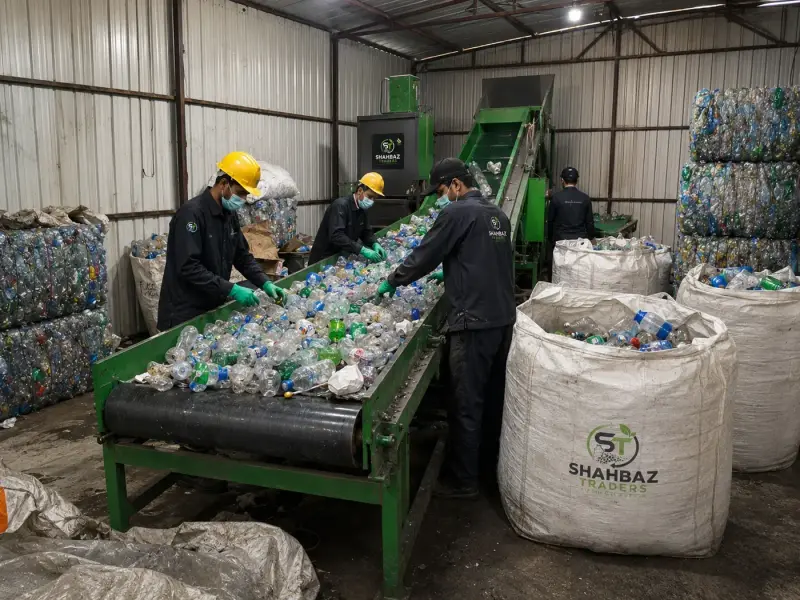
A PET bottle passes through several hands before it becomes fibre or packaging: collection → sorting → baling → crushing → washing → flake buyers. Each step adds value — and cost. The question for a new business is simply: which step can you do better or cheaper than the next person?
For most newcomers, the answer is collection and sorting. Recyclers like us always need more clean, sorted bottles. Machinery that processes bottles you don’t yet have cannot make money.
You build a network — kabadiwalas, shops, hotels, offices, schools, events, housing societies — buy their bottles, sort them, and sell in bulk to a recycler.
This is the right start for most people. Our guide to selling PET bottles in Pakistan explains how recyclers grade and pay, and setting up a buy-back loop shows how businesses organise collection.
The same as Model 1, but you compress sorted bottles into bales with a baling press.
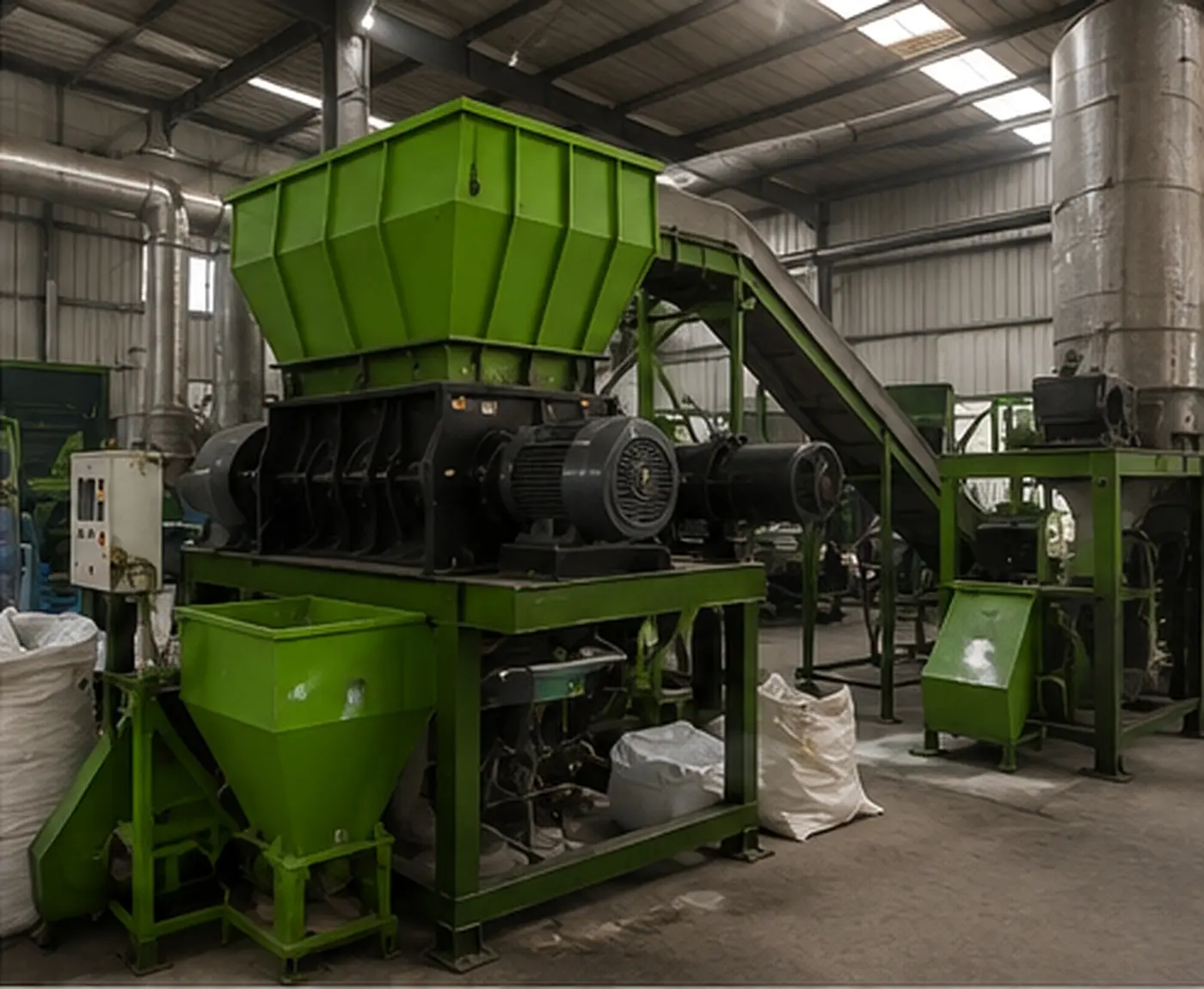
A crusher (granulator) cuts bottles into unwashed flakes, often called “crush”. It looks like the obvious next step, but count the real costs first:
| Cost or need | Why it matters |
|---|---|
| Machine & installation | The purchase price is only the start — foundations, motor, blades and a feed setup. |
| Power | Crushers usually need a three-phase industrial connection; load-shedding means idle time or generator fuel. |
| Blades & maintenance | Blades wear and need sharpening or replacement; sand and stones in dirty bottles wear them faster. |
| Labour | Feeding, sorting before crushing, and bagging the output. |
| Steady supply | The machine earns only while it runs. Without regular bottles it sits idle. |
| A buyer for your crush | Unwashed crush is bought by washers and recyclers — agree who will buy it, and at what quality, before you invest. |
Crushing makes sense when you already have consistent volume, sort well (crush from mixed or dirty bottles has little value), and have a buyer lined up. If you are searching for a crushing machine price before you have steady supply, you are probably a year early.
Turning crush into clean, hot-washed flake for fibre and packaging is a different scale of business: washing tanks, hot water and energy, friction washers, dryers, a large water supply, effluent treatment, and environmental and municipal approvals (in Punjab, check with the Environmental Protection Agency and your local authority before you invest). Buyers then expect consistent quality and a COA — see what an rPET COA shows. It is the step where quality is won or lost, which is why we keep it under one roof in our own plant. You can see the whole chain in how PET recycling works.
Growing step by step means every machine you buy is fed from day one.
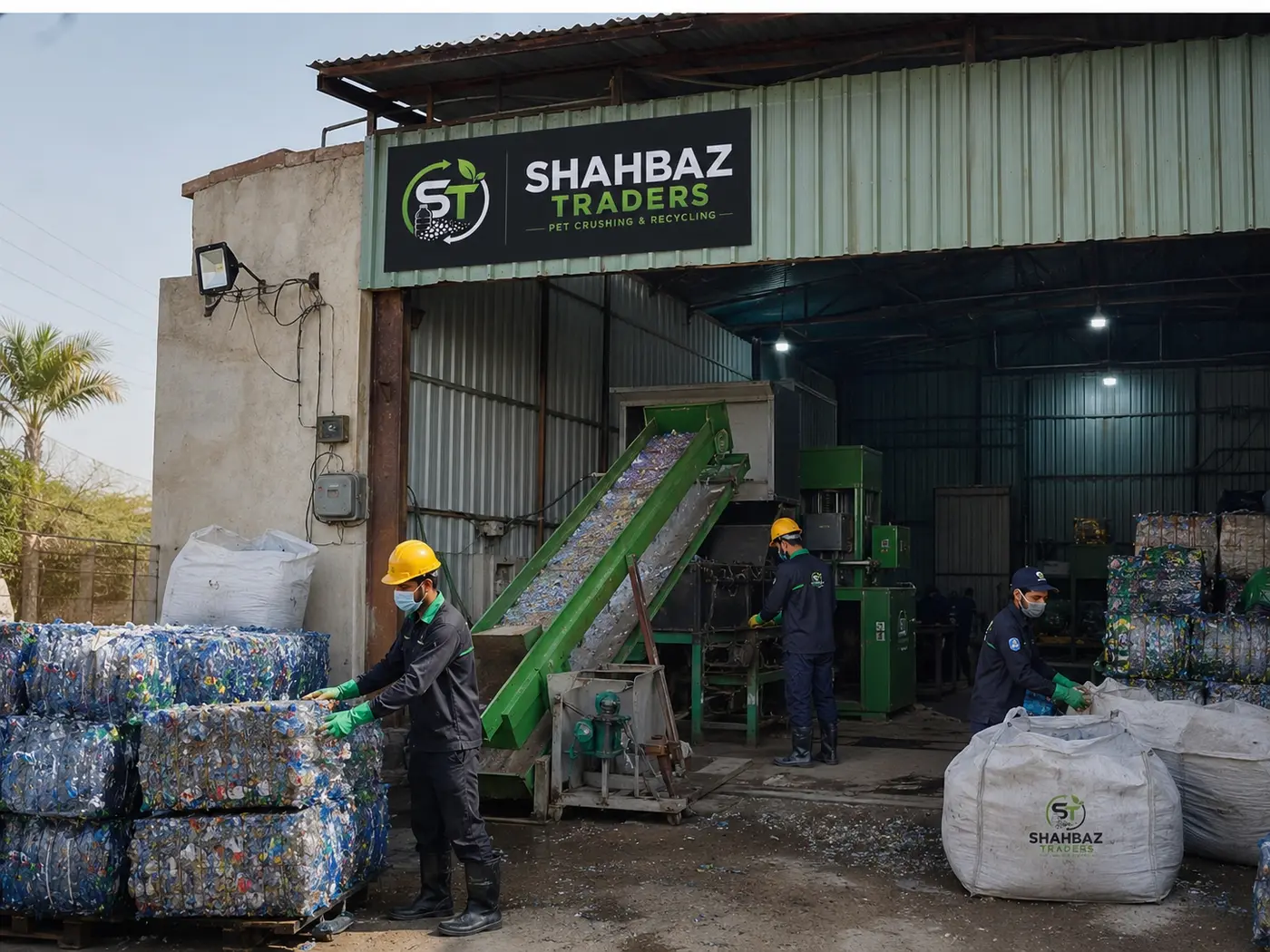
We buy post-consumer PET bottles from collectors and dealers across Punjab — from about 1 ton to full truckloads — with weighing in front of you and prompt payment. If you are building a collection business in Lahore, Faisalabad, Sheikhupura, Okara or nearby, we can be the steady buyer at the end of your chain. If you already crush, send us a photo and quantity of your material and we will tell you whether and how we can take it.
Tell us your area, bottle type and expected monthly volume. We reply with today’s rate and how collection works for your load.
WhatsApp for today’s rate Use the formFor scrap dealers, collectors, factories and collection points across Punjab. Bring your post-consumer PET bottles to our Okara yard or ask us to collect — honest weighing, today’s rate, prompt payment.
Bring your bottles to our Okara yard. Weighed in front of you and paid promptly.
Tell us your quantity and location — we quote today’s rate and can arrange collection.
Factories, collection points and bulk suppliers — agreed rate, schedule and dispatch.
Get a better rate: clean, dry, sorted bottles — kept apart from other plastics, and baled if you can — are worth more than mixed or wet loads.
WhatsApp or call with the quantity, bottle type and your location. A photo helps.
We quote a fair buy-back rate for your grade — clear, coloured or mixed, loose or baled.
Drop off at our Okara yard, or we arrange pickup for larger loads.
Weighed transparently on arrival and paid without delay.
Send us your quantity on WhatsApp — we’ll reply with today’s rate. Or come straight to our yard.
How Lahore businesses can turn PET waste into value — set up a collection & buy-back loop that cuts costs, adds revenue, and gets you ahead of EPR.
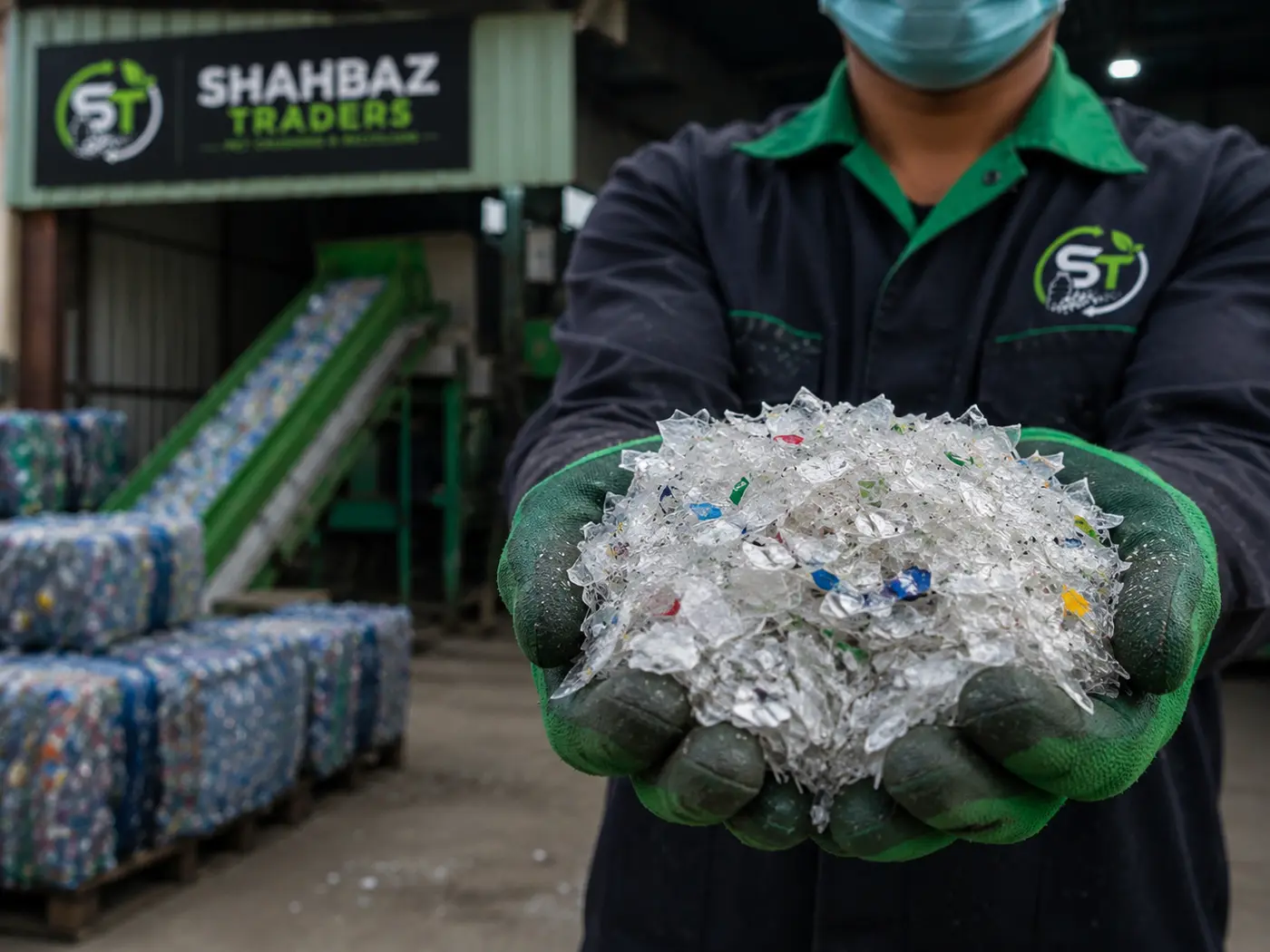
Plain-English definitions of every term you’ll meet buying rPET flakes or selling PET bottles — from IV and PVC ppm to crush, tare and FOB.
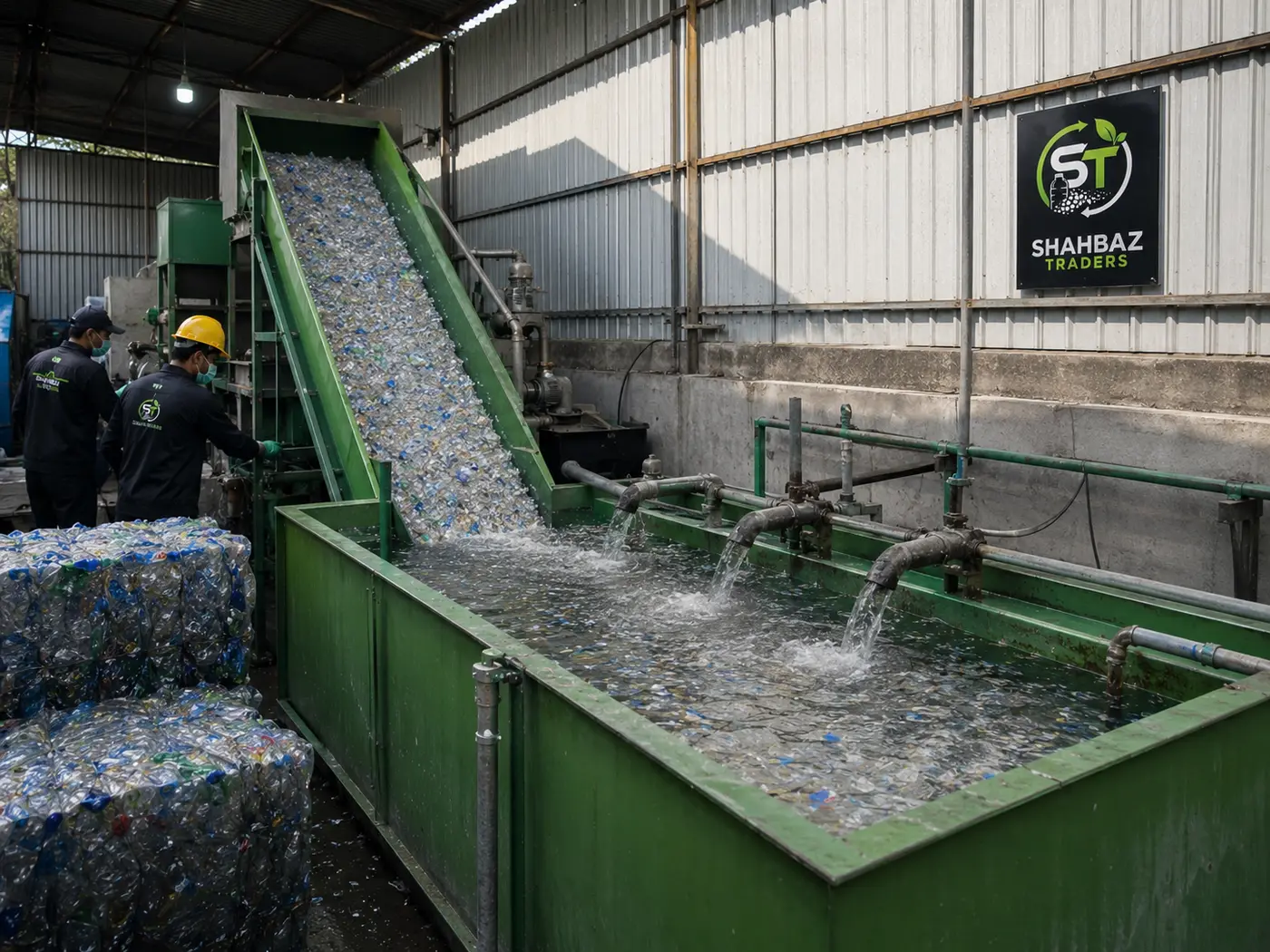
Which rPET grade suits which fibre product, how to accept lots consistently, and how Sheikhupura plants can secure supply that holds through winter.
Tell us your area and expected monthly volume — we’ll tell you what we can buy, at what grade, and how collection works.
Tell us your grade, application and monthly volume. We’ll quote with the spec behind it — COA & TDS on request.
Fair buy-back rates, honest weighing and prompt payment for vendors, factories and collection points.