
A recycled PET Certificate of Analysis lists the measured properties of a specific lot. The four numbers that matter most are intrinsic viscosity (IV), moisture, PVC contamination and total contamination — compare each against your process spec, batch by batch.
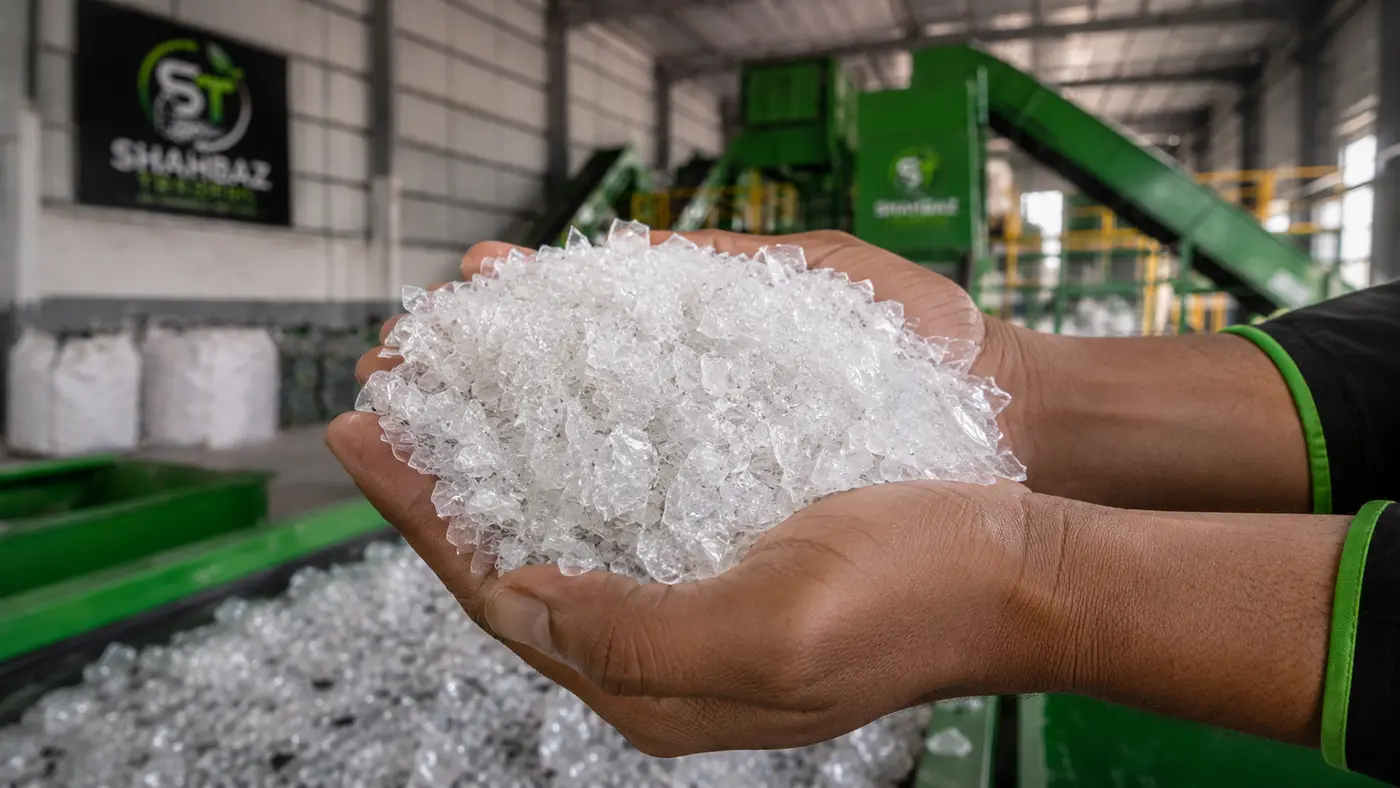
A Technical Data Sheet (TDS) states the target specification for a grade — the range a supplier commits to. A Certificate of Analysis (COA) reports the actual measured values for one production lot. Reputable rPET suppliers issue a COA with every shipment so you can confirm the material matches what you ordered.
IV is a measure of PET's molecular weight and, in practice, how it will process. A typical recycled PET IV is around 0.67–0.80 dL/g. If IV is too low, PET becomes brittle and creates more fines when granulated; if it's too high, the melt viscosity can interfere with moulding or spinning. Match IV to your process rather than assuming "higher is better."
Post-consumer PET flake moisture is generally specified below 1.0%, and cleaner grades target well under that. Moisture matters because PET is hygroscopic — even small amounts of water can break polymer chains at melt temperature, cutting IV and mechanical properties. Lower moisture means less pre-drying for you.
PVC is the single most damaging contaminant in PET recycling: it degrades and discolours PET during melting. Specifications hold it very low — often single-digit to low-tens of ppm. PP/PE (from caps) is also limited because it doesn't melt with PET.
Cleaner grades also report floatable/label content, metal, glass and black-speck counts. Indicative "good" targets seen in industry specs include floatables under ~15 ppm, metal under ~10 ppm and black-speck particles in the low tens of ppm — but always use the numbers on your supplier's TDS/COA.
Below are general industry-typical ranges for context only — not a specific product spec. Ask your supplier for their actual TDS and per-lot COA.
| Parameter | Typical range (context only) |
|---|---|
| Intrinsic viscosity (IV) | ~0.70–0.80 dL/g |
| Moisture | < 1.0% |
| PVC | Very low ppm (≈ <5–50 ppm) |
| Total contamination | Low tens of ppm |
Sources: Association of Plastic Recyclers — PET Rigid; INTCO — rPET Flakes for Fibre & Strapping; ScienceDirect — PVC in PET recycling.
Request a sample and its Technical Data Sheet — evaluate the numbers on your own line before you commit.