PET bottles are recycled into flakes through mechanical recycling: collected and inspected, sorted by polymer and colour, crushed, separated from caps and labels in a float-sink tank, washed, rinsed, dried, then tested, packed and dispatched as rPET flakes.
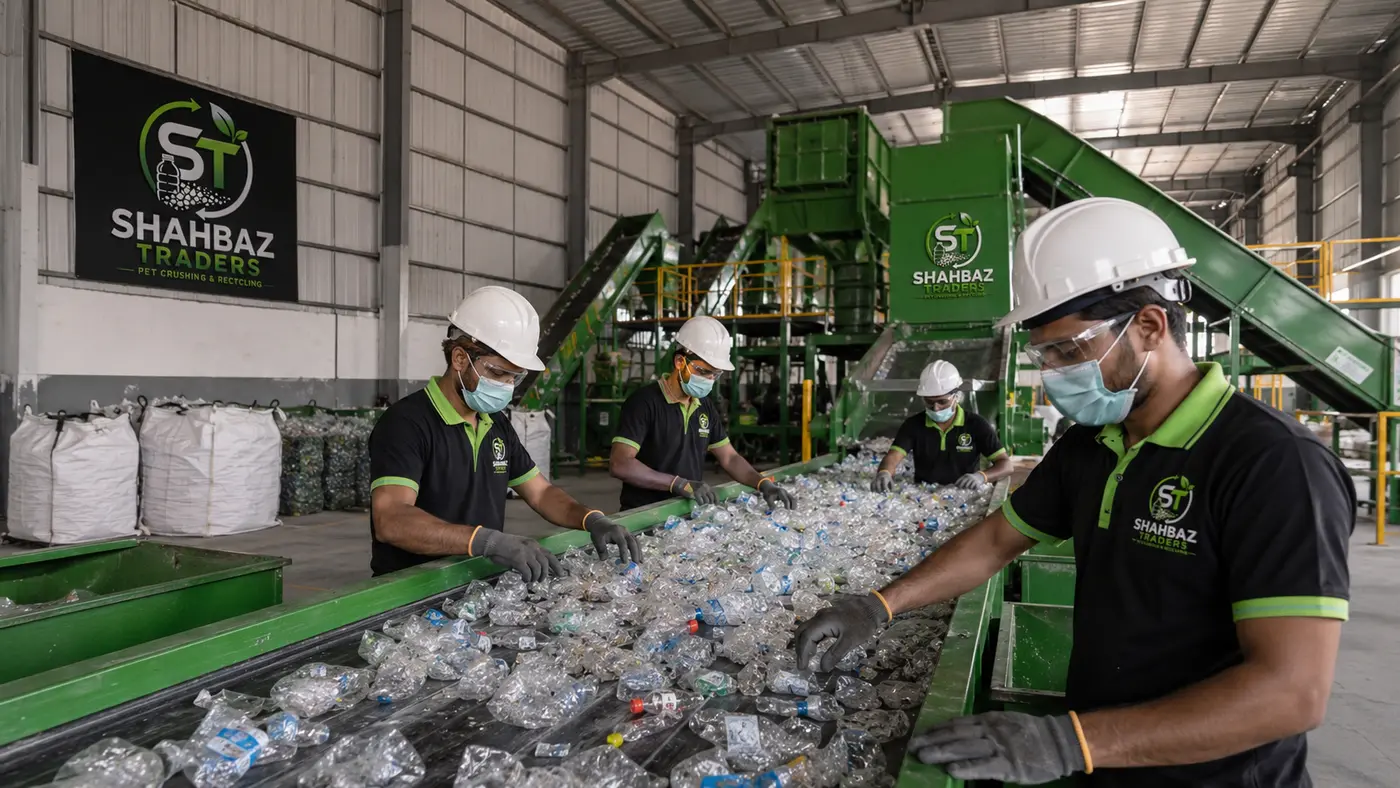
Here is the typical mechanical route from post-consumer bottle to finished flake, and the buyer benefit of each stage.
Post-consumer PET bottles are collected, weighed and logged, then checked for non-PET material and heavy contamination. Buyer benefit: problems are caught before processing, protecting output quality.
Bottles are separated from other polymers and graded by colour (clear vs mixed). Caps and labels are targeted for removal. Buyer benefit: consistent colour and fewer foreign polymers.
Bottles are size-reduced into flakes with an industrial granulator at a controlled particle size. Buyer benefit: uniform flake that feeds smoothly on your line.
Flakes pass through a water density tank. PET is denser than water and sinks; lighter PP/PE caps, labels and paper float and are skimmed off. Buyer benefit: the key step for cutting PP/PE and label contamination.
Flakes are washed to remove dust, glue and oils. Cold washing handles surface dirt; hot caustic washing removes glue and grease for a cleaner, higher-grade flake. Buyer benefit: cleaner flake and better melt behaviour. More in hot vs cold wash.
A neutralising rinse follows, then the flakes are dried to a target moisture level. Buyer benefit: lower moisture means less pre-drying for you and less IV loss in the melt.
Flakes are tested (IV, moisture, PVC, contamination), given a batch ID, packed and dispatched with a Certificate of Analysis. Buyer benefit: documented, traceable quality per lot. See how to read an rPET COA.
The process above is mechanical recycling: PET is cleaned and physically reprocessed into flake without breaking its chemical structure. Chemical recycling depolymerises PET back to its building blocks (monomers) and rebuilds virgin-like resin — a separate, more energy-intensive and less common route, mainly used for food-grade resin production.
Related: Our PET recycling services · See the process in our gallery.
We handle the whole chain — from collection to documented rPET flake supply. Let's talk.