How to Read an rPET Flake COA
A plain-English guide to the numbers on a recycled PET Certificate of Analysis — IV, moisture, PVC and contamination.
A good COA is the start, not the end. This is a practical incoming-inspection routine for Faisalabad’s polyester fibre and yarn mills — what to check when an rPET flake truck arrives, how to sample it, and which simple tests catch the problems that cause breaks on the spinning line.
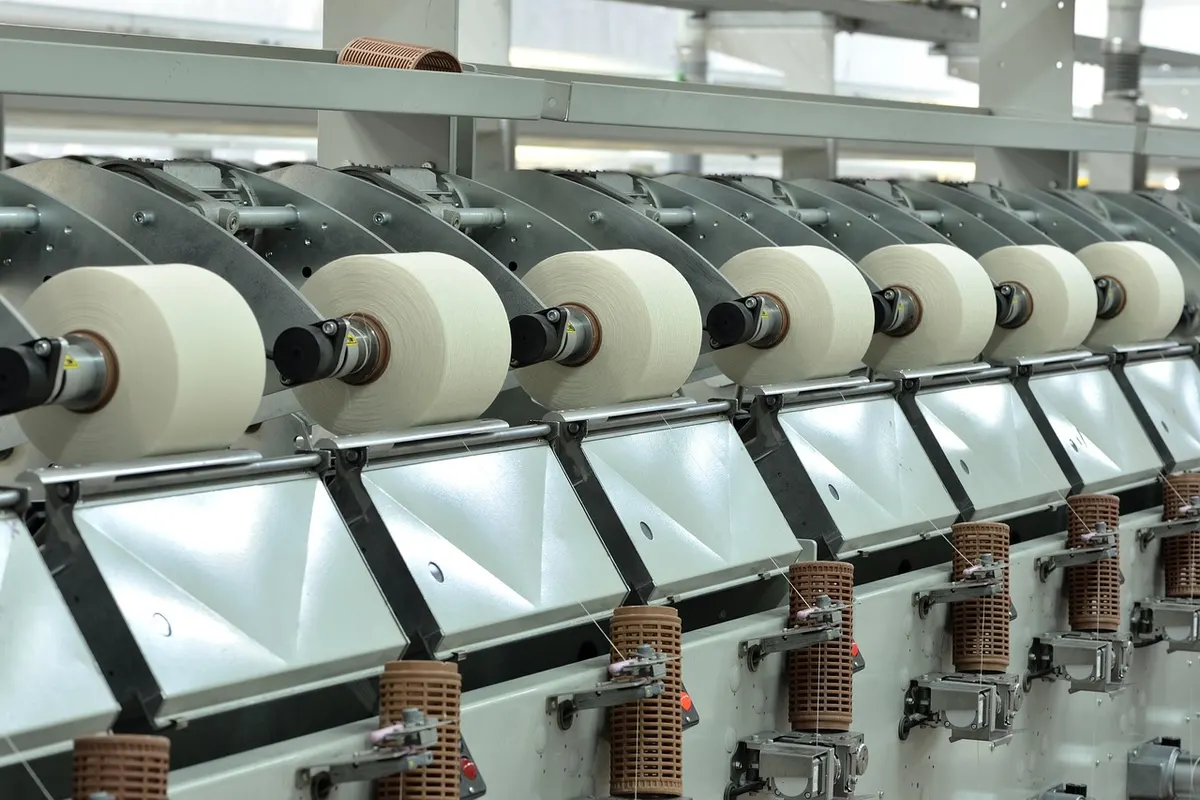
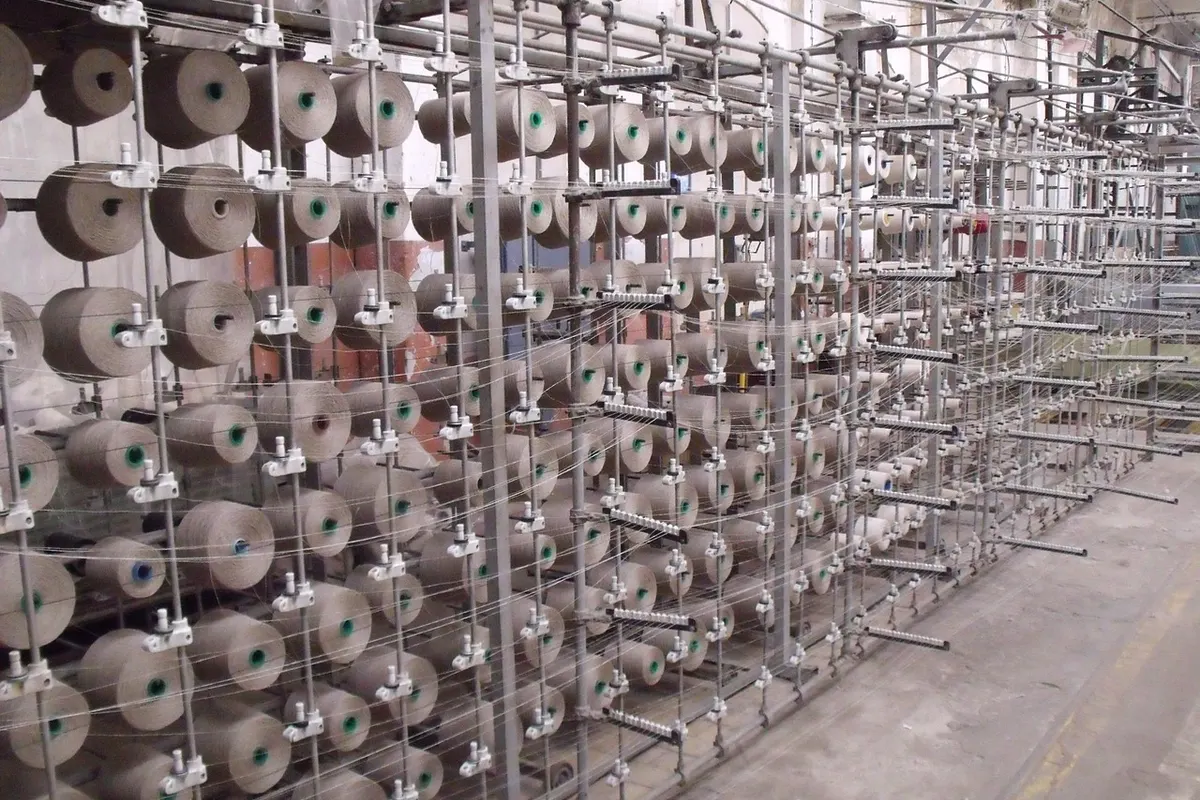
Faisalabad’s polyester fibre and yarn mills are the biggest users of recycled PET in Punjab. Most mills already know which specs matter — we covered them in rPET for polyester fibre mills and how to read an rPET COA. This guide is about the next step: what to do when the truck is at your gate, so that off-spec flake is caught before it reaches the extruder, not after the breaks start.
A certificate of analysis (COA) tells you how a sample from a lot tested. It is essential — but it cannot guarantee that every bag in a 20-tonne delivery is the same. Bottle supply changes week to week, and a single bag with PVC or wet flake can cause filter blockages, yarn breaks and colour spots across a whole production run.
A short, consistent routine at receipt protects you in three ways: it catches problems before they cost machine time, it gives you evidence if a lot must be rejected, and it tells your supplier exactly what you expect — which, over time, is the cheapest quality control there is.
The most common mistake is testing a handful from the top of one bag. Contaminants settle and separate during transport, so the top of a bag is rarely typical. A practical routine:
| Check | How | What a problem looks like |
|---|---|---|
| Visual | Spread a weighed sample on a white tray under good light | Coloured flakes in a clear lot, label pieces, dirt, black specks, fines/dust |
| Float–sink | Stir a weighed sample in a bucket of water; skim what floats, dry and weigh it | Floating pieces are PP/PE (caps, rings, labels) — PET sinks |
| Moisture | Moisture analyser, or weight loss on drying | Readings above the agreed limit, or wet/damp feel in the bag |
| Heat screen for PVC | Heat a thin layer of flake in a lab oven or on a hot plate | Flakes that turn brown or black are a strong sign of PVC |
| Magnet & smell | Pass a magnet through the sample; note any unusual odour | Metal pieces; oil, chemical or sour smell from poorly washed material |
Record each result against the lot number. Over a few months these records show you — and your supplier — exactly how consistent the supply really is.
The float–sink test is excellent for caps and labels because PP and PE are lighter than water while PET is heavier. But PVC is also heavier than water, so it sinks with the PET and looks almost identical. That is why PVC is the contaminant that most often slips through — and in fibre production even a small amount can degrade the melt, blacken spots and block filters.
The heat screen above is a common way to spot it quickly: when heated, PVC degrades and darkens while clean PET does not. Treat it as a screen, not a measurement — if you see dark flakes, hold the lot and test properly. For the background on why PVC and PP/PE are the priority, see our fibre mill guide; for how hot washing helps remove glue and residues, see hot-washed vs cold-washed flakes.
Some properties cannot be judged on site. Send the retained sample for laboratory testing when:
Most disputes happen because nobody wrote down what “acceptable” means. Before the first delivery, agree in writing:
A supplier that is confident in its material will welcome these rules. One that resists them is telling you something. Our checklist for judging suppliers is in choosing an rPET flake supplier in Pakistan.
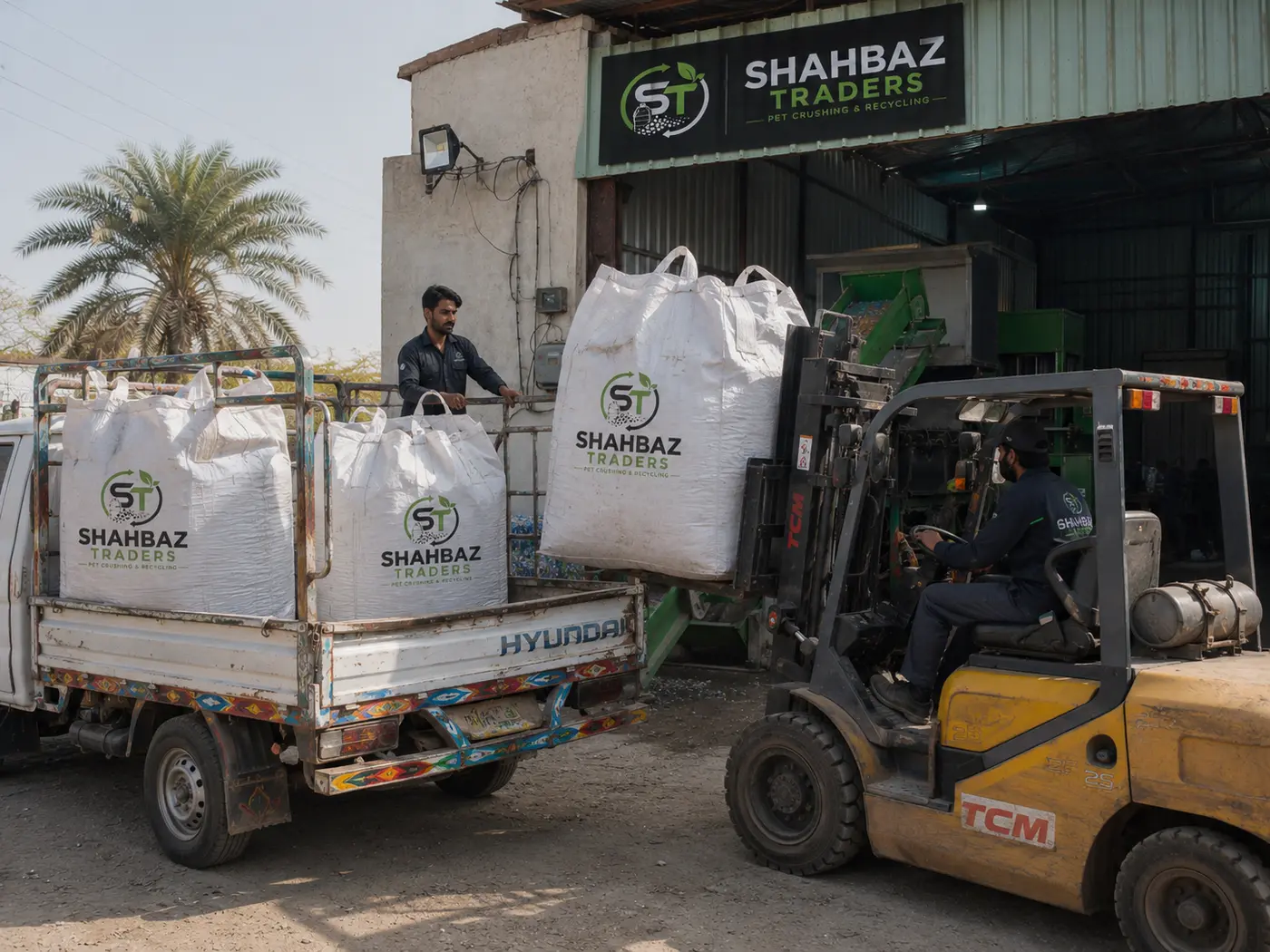
At Shahbaz Traders we sort, crush and hot-wash post-consumer bottles in Okara, with caps, labels and glue removed and PVC controlled. Every lot can come with a COA and TDS on request, and we are happy to send a sample before your first order so your QA team can run exactly the checks above. We deliver to mills across Faisalabad’s industrial areas, including M-3 Industrial City, the Faisalabad Industrial Estate, Sargodha Road and Jhang Road. More on our Faisalabad supply is on the Faisalabad page.
Tell us your grade, monthly volume and spec limits. We’ll send a sample with its COA and quote today’s rate delivered to Faisalabad.
Request a sample & quote WhatsApp usFor scrap dealers, collectors, factories and collection points across Punjab. Bring your post-consumer PET bottles to our Okara yard or ask us to collect — honest weighing, today’s rate, prompt payment.
Bring your bottles to our Okara yard. Weighed in front of you and paid promptly.
Tell us your quantity and location — we quote today’s rate and can arrange collection.
Factories, collection points and bulk suppliers — agreed rate, schedule and dispatch.
Get a better rate: clean, dry, sorted bottles — kept apart from other plastics, and baled if you can — are worth more than mixed or wet loads.
WhatsApp or call with the quantity, bottle type and your location. A photo helps.
We quote a fair buy-back rate for your grade — clear, coloured or mixed, loose or baled.
Drop off at our Okara yard, or we arrange pickup for larger loads.
Weighed transparently on arrival and paid without delay.
Send us your quantity on WhatsApp — we’ll reply with today’s rate. Or come straight to our yard.
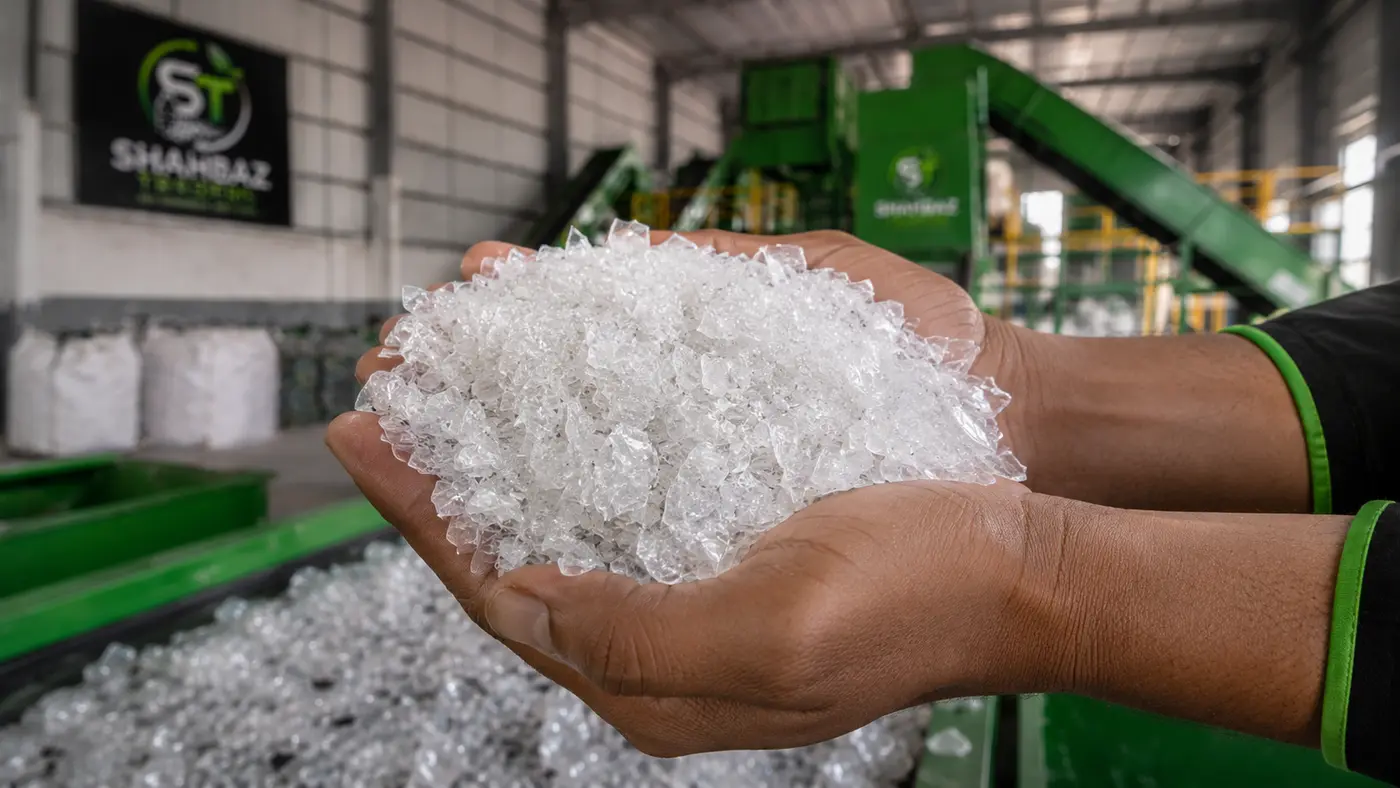
A plain-English guide to the numbers on a recycled PET Certificate of Analysis — IV, moisture, PVC and contamination.
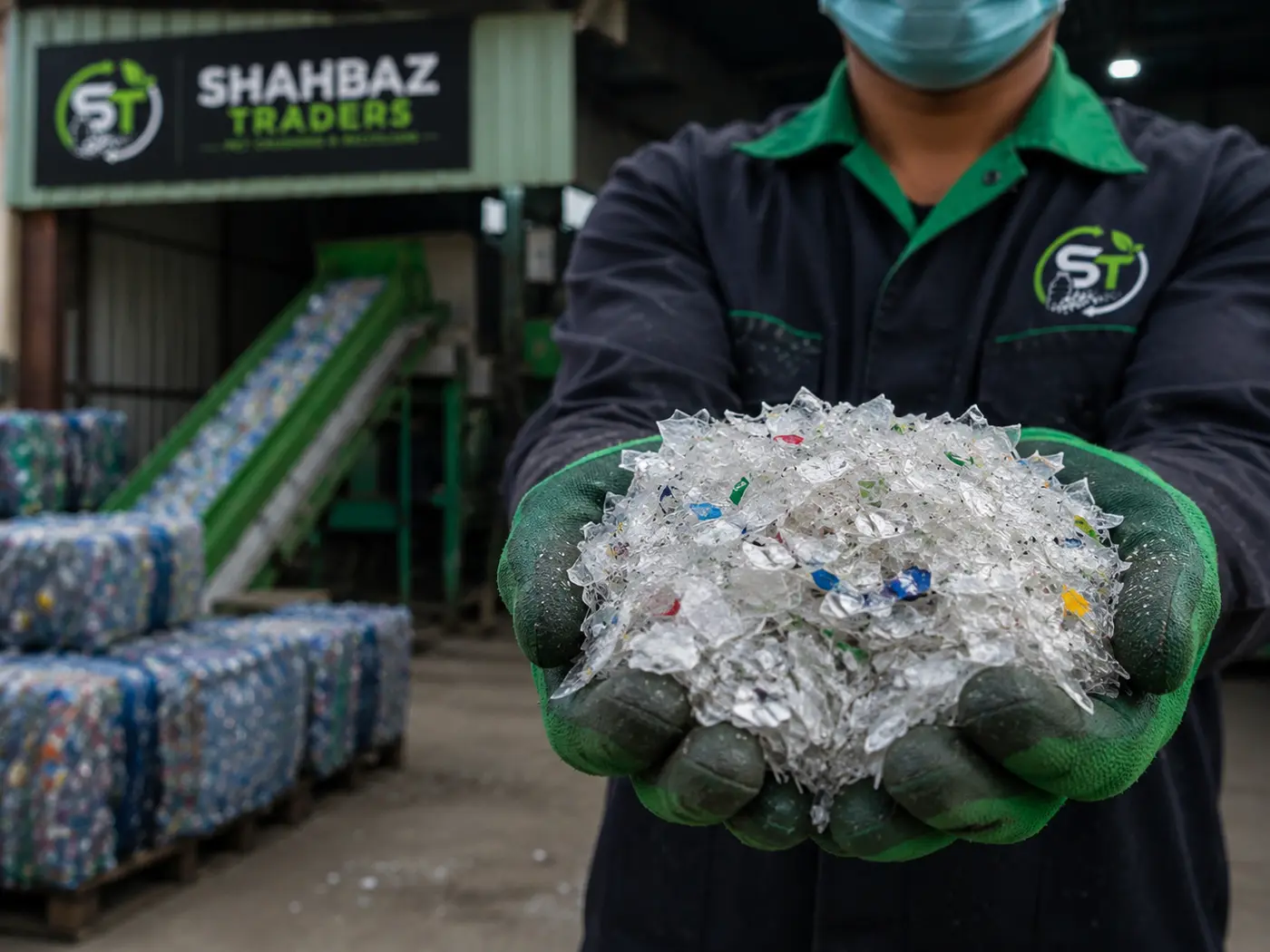
Plain-English definitions of every term you’ll meet buying rPET flakes or selling PET bottles — from IV and PVC ppm to crush, tare and FOB.
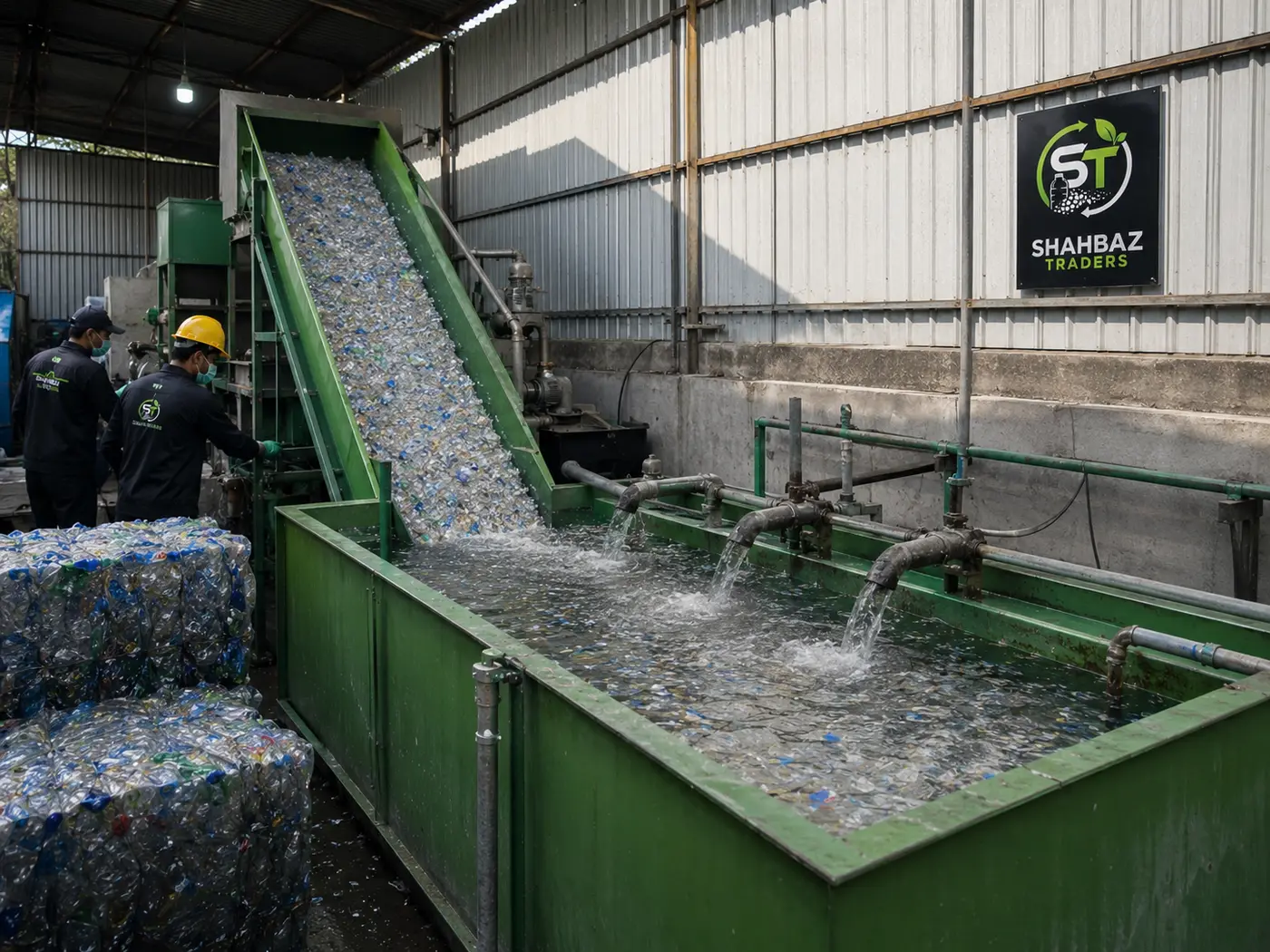
Which rPET grade suits which fibre product, how to accept lots consistently, and how Sheikhupura plants can secure supply that holds through winter.
Tell us your grade, monthly volume and spec — we quote with the COA behind it and can send a sample first.
Tell us your grade, application and monthly volume. We’ll quote with the spec behind it — COA & TDS on request.
Fair buy-back rates, honest weighing and prompt payment for vendors, factories and collection points.