
Hot-washed rPET flakes are washed in heated caustic water (~60–80°C), stripping glue, oils and residues for a cleaner, higher-value flake. Cold-washed flakes use ambient water, cost less, but only remove surface dirt.
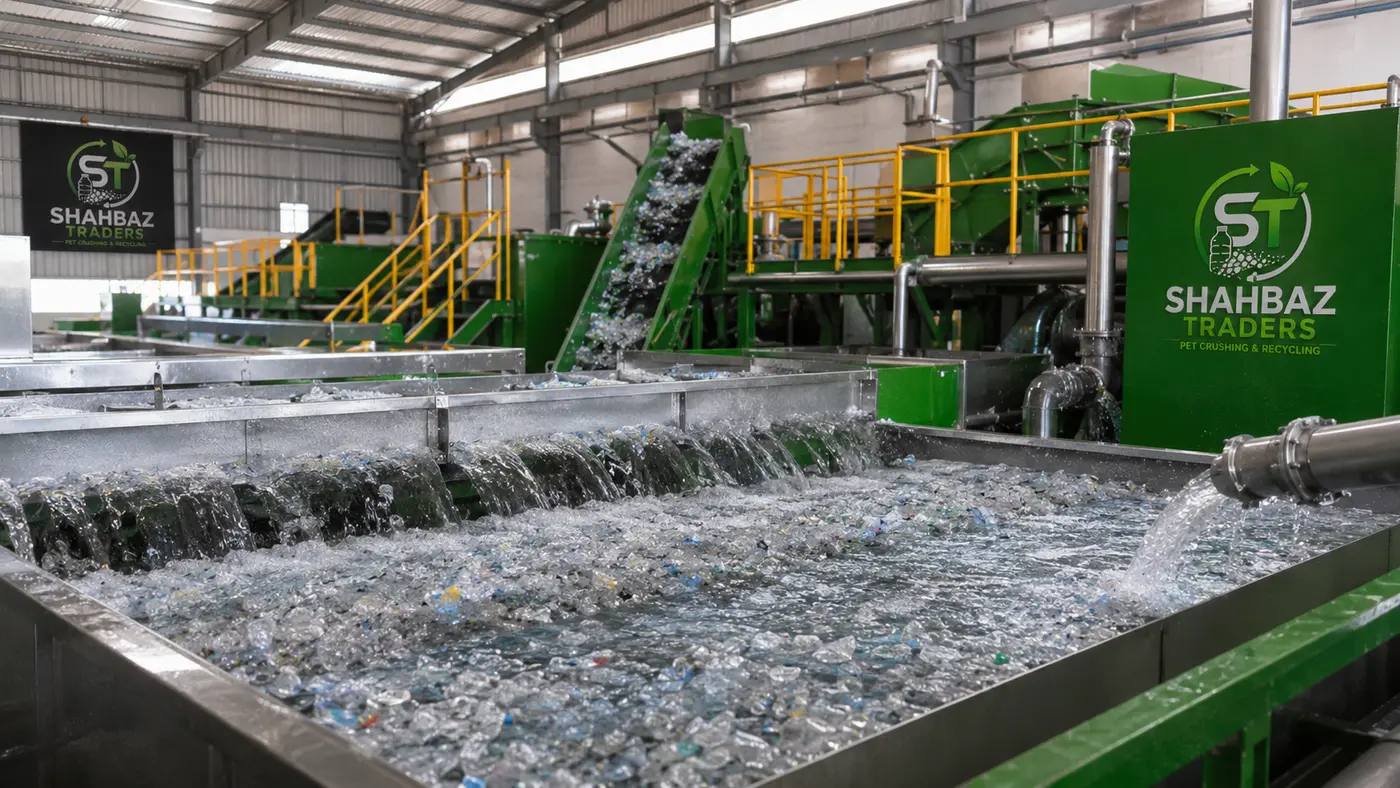
The difference comes down to wash temperature and chemistry. Cold-wash lines run at roughly 10–20°C and mainly rinse off surface dust and loose contamination. Hot-wash lines heat the water to around 60–80°C and add an alkaline (caustic soda) solution, which dissolves label glue, grease and oily residues — producing a noticeably cleaner, higher-purity flake. As a rule, hot-washed flake is better quality and priced higher; cold-washed flake is cheaper and uses less energy.
| Hot-washed | Cold-washed | |
|---|---|---|
| Wash temperature | ~60–80°C, caustic solution | ~10–20°C, ambient water |
| Removes | Glue, oils, grease + surface dirt | Surface dirt only |
| Grade & price | Higher grade, higher price | Lower grade, cheaper |
| Best for | Fibre, sheet, packaging | Strapping, lower-spec uses |
Match the grade to the tolerance of your process:
Whatever the grade, the numbers that matter to your line — intrinsic viscosity, moisture and contamination — should come on a Technical Data Sheet and a per-lot Certificate of Analysis. See our guide on how to read an rPET COA.
No. Hot caustic washing improves cleanliness, but food-contact recycled PET additionally requires an officially assessed decontamination process — an FDA "No Objection" letter in the US or an EFSA positive opinion in the EU. We cover this in Is recycled PET food-grade?
Sources: Recycling Machines — Hot vs Cold Washing; Energycle — Cold vs Hot PET Washing Lines.
Tell us your application and volumes and we'll recommend the right grade — with a matched Technical Data Sheet.