rPET for Polyester Fibre Mills in Pakistan: Specs, Sourcing & Quality Control
Pakistan’s textile belt is the single biggest buyer of recycled PET. For polyester staple fibre and filament producers, the right rPET flake means cleaner spinning, fewer breaks and consistent yarn. Here is what to specify and how to source it.
Textiles · 24 Aug 2026 · 11 min read
Key takeaways
Polyester fibre is the largest end-use for rPET flake in Pakistan, centred on the Punjab textile belt.
For spinning, intrinsic viscosity (IV), moisture and contamination are the make-or-break parameters.
Hot-washed, colour-sorted, low-moisture flake spins more cleanly and produces fewer breaks and defects.
PVC and PP/PE contamination cause specks, breaks and colour problems — control them hard.
Local sourcing shortens lead times and reduces exposure to import and currency swings.
Polyester dominates Pakistan’s man-made fibre demand, and recycled PET is an increasingly important feedstock for it. For a spinning mill, rPET flake is not a commodity to buy on price alone — it is a raw material that either runs cleanly through your line or fills it with fines, breaks and colour defects. Getting the specification and the supplier right protects both your yield and your yarn quality.
Why fibre mills are the core rPET market
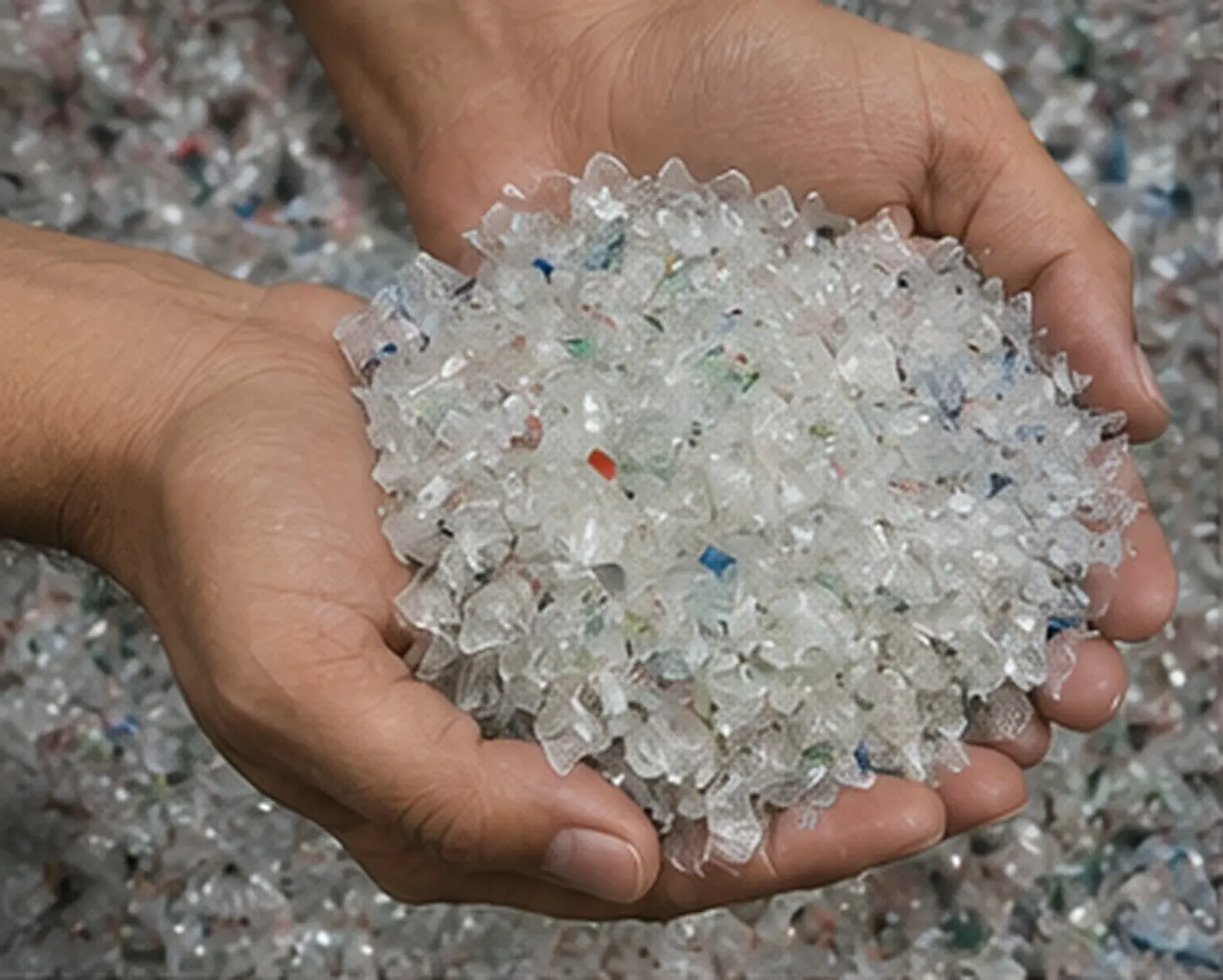
Recycled PET flake can be spun into polyester staple fibre (PSF) and, with the right grade, filament — feeding everything from spun yarn to nonwovens and filling. Because Pakistan’s textile industry is so large and concentrated in Punjab (with Faisalabad as a hub), fibre demand is what anchors the whole rPET market. If you run a mill, you are the customer the recycling chain is built around.
The specs that matter for spinning
Three parameters decide how flake behaves on a fibre line:
Intrinsic viscosity (IV) — a proxy for molecular weight and processability. Recycled PET flake IV commonly sits around 0.70–0.80 dL/g. Too low and the fibre is weak and breaks; too high and melt viscosity can disturb spinning. Match IV to your process.
Moisture — PET is hygroscopic, so moisture must be controlled (typically below 1%). Wet flake loses IV in the melt and increases breaks; low-moisture flake means less pre-drying for you.
Contamination — PVC, PP/PE (caps), metal, glass and black specks are the enemy of clean spinning.
Impact of flake quality issues on a fibre spinning line (illustrative)Illustrative severity ranking to guide what to control first.
Why PVC and PP/PE are the priority
PVC degrades and discolours PET at melt temperature, producing yellowing, specks and weak points that show up as breaks and defects in yarn. PP/PE from caps does not melt with PET and creates unmelts. That is why serious recyclers rely on float-sink separation and disciplined sorting to strip these out — and why your COA should report PVC in low ppm.
Hot-washed vs cold-washed for fibre
For demanding spinning, hot-washed flake is usually the right choice: heated caustic washing removes glue, grease and oily residues, giving cleaner melt behaviour and fewer defects. Cold-washed flake is cheaper and can suit lower-spec uses, but for fibre quality most mills should specify hot-washed, colour-sorted material. (More in hot vs cold wash.)
Colour sorting and consistency
Yarn appearance depends on consistent flake colour. Specify a clear or a defined coloured stream, and ask how the supplier keeps colour consistent batch to batch. A supplier who colour-sorts and tests per lot will save your quality team constant firefighting.
Sourcing locally: the practical case
Buying rPET from a domestic recycler has concrete advantages for a mill:
Shorter lead times and easier scheduling than imports.
Less currency and import exposure — helpful when the rupee is volatile.
Direct quality dialogue — you can visit, sample and give feedback that actually changes the next batch.
Supply-chain story — locally recycled content supports sustainability claims for your buyers.
A sourcing checklist for mills
Define your target IV, moisture and contamination limits for your line.
Request a TDS per grade and COAs from several recent lots.
Specify hot-washed and colour-sorted where quality demands it.
Trial a paid sample on your spinning line before volume.
Agree reliable monthly volume, packaging and lead times.
Running a fibre or filament line?
Tell us your IV, moisture and colour targets — we’ll match a grade and send a sample with its TDS.
What IV should rPET flake have for polyester fibre?
It depends on your process, but recycled PET flake IV commonly sits around 0.70–0.80 dL/g. Low IV makes fibre weak and prone to breaks; very high IV can disturb spinning. Match the IV to your line rather than assuming higher is better.
Why is PVC such a problem for fibre spinning?
PVC degrades and discolours PET at melt temperature, causing yellowing, black specks and weak points that appear as breaks and defects in yarn. It must be held to very low ppm, which requires good sorting and float-sink separation.
Should fibre mills use hot-washed or cold-washed rPET?
For most fibre applications, hot-washed, colour-sorted flake is the better choice because it spins more cleanly with fewer defects. Cold-washed flake is cheaper but only suits lower-spec uses.
Is locally sourced rPET better than imported for a Pakistani mill?
Local sourcing offers shorter lead times, less currency/import exposure, direct quality feedback, and a stronger sustainability story — provided the supplier delivers consistent, documented quality.
Reflects standard practice for spinning recycled PET into polyester fibre. Chart severity ranking is illustrative.