rPET Flakes Supplier in Faisalabad: A Buyer’s Guide for Textile & Polyester Mills
Faisalabad runs on textiles — and recycled PET (rPET) flake is now a core raw material for its polyester fibre and yarn mills. This guide explains what to buy, how local sourcing lowers your cost and risk, and how to judge a genuinely good rPET supplier.
Faisalabad · 24 Aug 2026 · 11 min read
Key takeaways
Faisalabad is Pakistan’s textile hub, so demand for recycled polyester (rPET) flake is concentrated here — mostly from fibre and yarn mills.
Buying rPET locally (vs importing) shortens lead times, cuts currency and freight risk, and lets you give direct quality feedback that changes the next batch.
For spinning, the numbers that matter are intrinsic viscosity (IV), moisture and contamination — not price per kilo alone.
Recycled flake is priced at a discount to virgin PET, so it lowers raw-material cost while supporting the recycled-content story buyers increasingly ask for.
A real supplier gives you a TDS per grade, a COA per lot, and a sample to run before you commit volume.
Faisalabad didn’t earn the nickname “the Manchester of Pakistan” by accident. Spinning, weaving, processing and garments cluster here at a scale that shapes the whole country’s man-made-fibre demand — and a growing share of that demand is being met with recycled PET (rPET) flake instead of virgin resin. If you run a fibre or yarn mill in or around Faisalabad, rPET is no longer a fringe input; it’s a raw material that directly affects your cost, your yield and your ability to win buyers who want recycled content.
This guide is written for the procurement and quality teams making that call. It covers the real benefits of sourcing rPET locally, what to specify so it runs cleanly on your line, and how to separate a dependable supplier from a risky one.
Why Faisalabad is the natural home of rPET demand
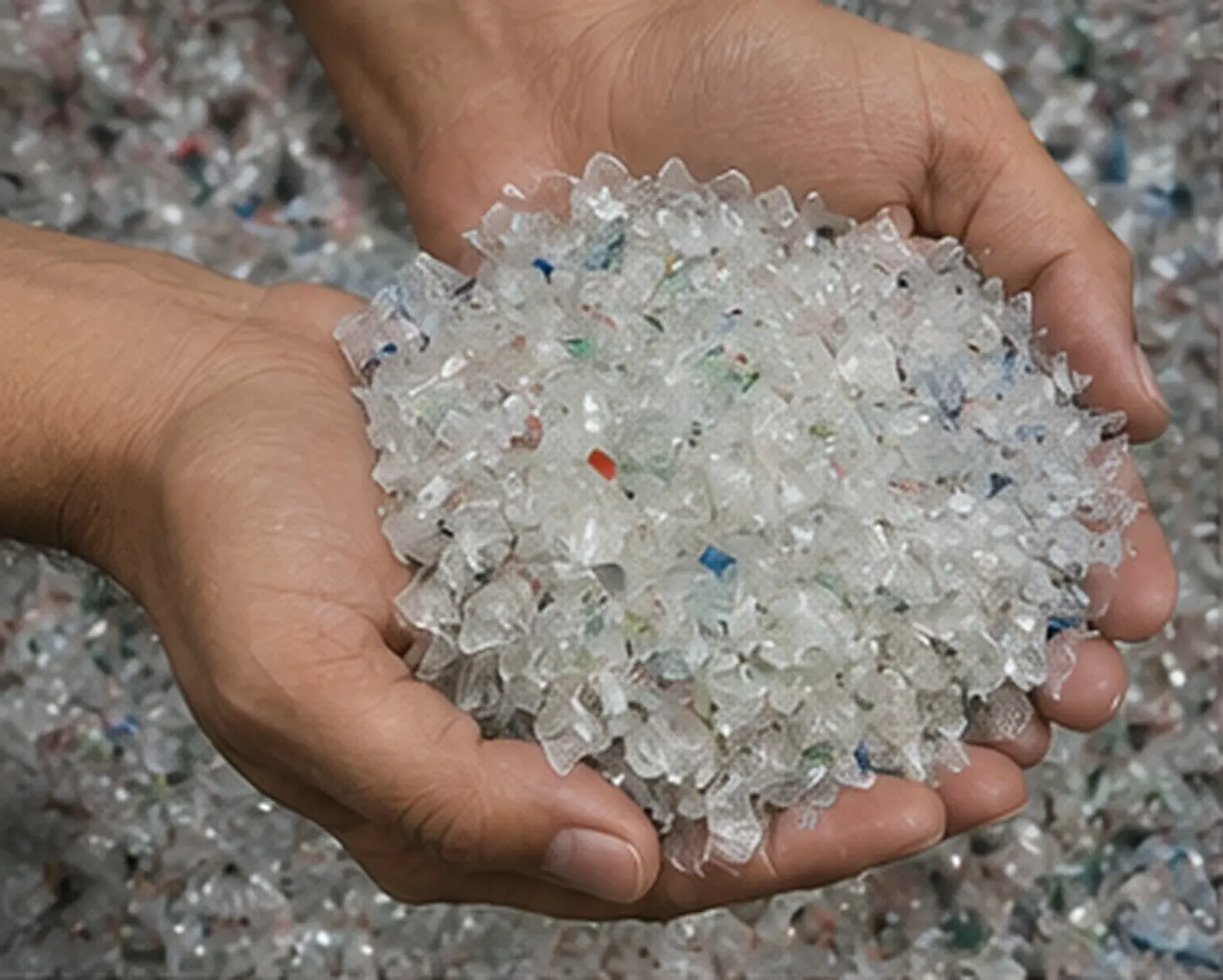
Recycled PET flake is spun into polyester staple fibre (PSF) and, at the right grade, filament — feeding spun yarn, blends, nonwovens and filling. Because so much of that spinning capacity sits in and around Faisalabad, this is where rPET buying is most active. The upshot for a local mill is simple: you’re the customer the whole recycling chain is built to serve, which gives you leverage on quality, consistency and terms — if you know what to ask for.
The real benefit: local sourcing vs importing
Plenty of rPET moves across borders, but for a Faisalabad mill, buying from a domestic recycler carries concrete advantages that show up on the P&L:
Shorter, more predictable lead times. No shipping, customs or port delays — you schedule production around a supply you can actually plan.
Less currency and freight exposure. Imported feedstock is priced against a moving USD/PKR rate plus freight. Local rPET reduces that volatility in your input cost.
A quality dialogue that works. You can visit, sample, and give feedback that changes the next batch — something an overseas supplier can rarely offer.
A supply-chain story you can sell. Locally recycled content strengthens the sustainability claims your own buyers are starting to demand.
The cost advantage of recycled over virgin
The headline benefit is cost. Recycled PET flake is priced at a discount to virgin PET resin, because it reuses material that already exists rather than making new polymer. That discount is exactly why mills adopt it — it lowers raw-material cost per tonne while delivering fibre that, at the right spec, performs. The size of the gap moves with the market (more on that below), but the direction is consistent: rPET gives you a cheaper feedstock and a greener one at the same time.
Why Faisalabad mills choose local rPET flake (relative importance, illustrative)Illustrative ranking to show the decision drivers — not survey data.
What to specify for a spinning line
Buying on price alone is how mills end up with fines, breaks and colour defects. Three parameters decide how flake behaves:
Intrinsic viscosity (IV) — a proxy for molecular weight and processability. Recycled PET flake IV commonly sits around 0.70–0.80 dL/g. Too low and fibre is weak and prone to breaks; too high and melt viscosity can disturb spinning. Match IV to your process rather than assuming higher is better.
Moisture — PET is hygroscopic, so moisture is typically held below 1%. Wet flake loses IV in the melt and increases breaks; low-moisture flake also means less pre-drying for you.
Contamination — PVC, PP/PE (caps), metal, glass and black specks are the enemy of clean spinning. PVC in particular degrades and discolours PET at melt temperature, so it must be held to low ppm.
For most fibre work, insist on hot-washed, colour-sorted flake — it spins more cleanly with fewer defects. We break the difference down in hot-washed vs cold-washed rPET, and how to read the numbers in how to read an rPET COA.
How rates move — so your budget doesn’t get surprised
rPET flake prices in Punjab track a few forces: virgin PET and crude-oil prices (rPET is discounted off virgin, so it follows), the USD/PKR rate (virgin is import-linked), flake quality (hot-washed, colour-sorted material commands more), and seasonal collection (bottle supply rises in summer, can tighten during monsoon). You don’t need to predict the market — but knowing these levers lets you time larger purchases and read a quote intelligently. We cover this fully in rPET flake prices in Punjab.
How to judge a real supplier
Before you move a production line onto a new feedstock, put the supplier through a short checklist:
Ask for a Technical Data Sheet per grade and a Certificate of Analysis per lot — not one old certificate.
Request COAs from several recent lots to see batch-to-batch consistency, not just the best day.
Confirm they colour-sort and can supply your stream reliably.
Get a paid sample and run it on your own line under normal conditions.
Agree reliable monthly volume, packaging and delivery to Faisalabad before committing.
Where can textile mills in Faisalabad buy rPET flakes?
From a domestic recycler that can supply consistent, documented flake. Shahbaz Traders supplies clear and coloured rPET flakes in bulk, with a TDS per grade and a COA per lot, delivered across Punjab including Faisalabad.
Is local rPET cheaper than imported for a Faisalabad mill?
Local sourcing usually lowers total cost — it removes freight and customs, reduces USD/PKR exposure, shortens lead times, and lets you give quality feedback. The flake itself is also priced at a discount to virgin PET.
What rPET specification should a spinning line use?
Focus on intrinsic viscosity (commonly ~0.70–0.80 dL/g), moisture (typically below 1%), and low contamination (especially PVC). Hot-washed, colour-sorted flake is best for clean spinning.
How do I confirm rPET quality before buying in volume?
Request a paid sample to run on your own line, and review COAs from several recent lots to check batch-to-batch consistency before committing.
Reflects standard practice for sourcing recycled PET into polyester fibre. Chart values are illustrative for explanation, not survey data.