Pakistan discards enormous volumes of PET bottles every year — and a growing recycling industry is turning that waste into recycled PET (rPET) flakes for textiles, strapping, sheet and packaging. Here is how the market works, what drives the rates, and where it is heading.
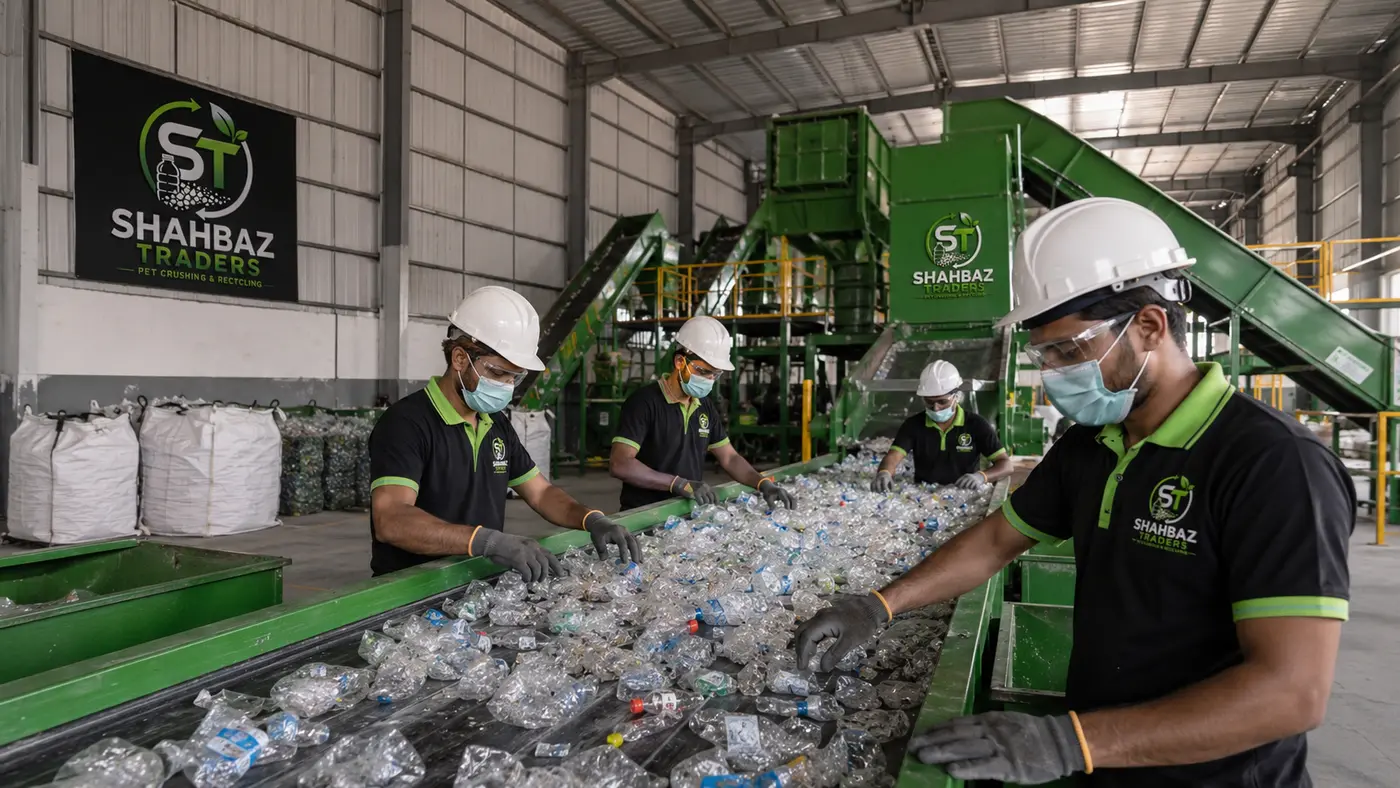
Every day, millions of PET bottles are emptied across Pakistan — at homes, offices, hotels, weddings and roadside stalls. A large share is collected by an informal network of pickers and kabaris, but a meaningful volume still ends up in landfills, drains and waterways. For manufacturers, that discarded plastic is not waste at all: it is a reliable raw material once it is sorted, crushed and washed into recycled PET (rPET) flakes.
This guide explains the PET recycling market in Pakistan in plain language — what PET is, how the collection-to-flake chain works, who buys the output, what moves the price, and what the next few years are likely to bring.
PET (polyethylene terephthalate, resin code #1) is the clear, lightweight plastic used for beverage bottles and many food containers. It is prized in recycling because it can be mechanically reprocessed into clean flakes and re-used in fibre, strapping, sheet and packaging — often many times over. In a country that imports most of its polymer feedstock, every tonne of PET recycled at home is a tonne that does not have to be imported as virgin resin.
That combination — a genuinely recyclable material, strong domestic demand from textiles, and pressure on imports — is what makes PET recycling one of the more commercially sound corners of Pakistan’s circular economy.
Pakistan generates several million tonnes of plastic waste each year, and only a fraction is formally recycled; the rest is landfilled, burned or leaks into the environment. PET is a relatively small slice of total plastic by weight, but because it is clean, valuable and easy to identify, its effective recovery rate is higher than most other plastics — collectors actively seek out bottles because they pay.
The takeaway is not the exact percentages — it is the size of the gap. Every bottle that is currently landfilled or littered is potential feedstock. As collection networks formalise and more brands commit to recycled content, that gap is where the growth is.
Understanding who does what helps buyers and suppliers see where they fit:
A well-run recycler adds value at the middle of this chain: it pays suppliers fairly for bottles, and it delivers a consistent, documented flake that manufacturers can run without surprises.
Demand is concentrated in a few industries:
Because so much demand sits with textiles, Punjab — and Faisalabad in particular — is the centre of gravity for rPET buying in Pakistan.
Recyclers and buyers both need to understand the levers behind the price:
We break the pricing mechanics down further in our upcoming pricing guide. For now, the rule of thumb is simple: cleaner, better-documented flake holds its value; contaminated material does not.
The industry is growing, but it is not without friction:
Three forces point the same way. Global and local brands are committing to recycled content in packaging and textiles. Conversations around Extended Producer Responsibility (EPR) are maturing, which would formalise collection and funding. And export demand for clean rPET flake gives well-run recyclers an additional outlet. For manufacturers, that means recycled raw material is becoming more strategic, not less; for suppliers of bottles, it means a durable market for what they collect.
Tell us your volumes and requirements — we’ll put together a tailored quote fast.
Request a Quote WhatsApp usGeneral references: industry practice on PET mechanical recycling and rPET grading. Figures shown in the chart are illustrative for explanation, not official statistics.